

A seasonal clothing checklist for new truckers is defined as a structured list of apparel items selected to keep drivers comfortable, safe, and functional across all weather conditions during extended long-haul routes. The trucking profession demands more from clothing than most jobs. A driver might leave Texas in summer heat and arrive in Montana during a cold snap, all within the same week. Industry best practice recommends packing 7–10 days of clothing with moisture-wicking base layers and seasonal outerwear. That range balances hygiene with the limited storage space inside a sleeper berth. Getting this right from the start saves money, reduces stress, and keeps the focus where it belongs: on the road.
What are the clothing essentials new truckers need for all seasons?
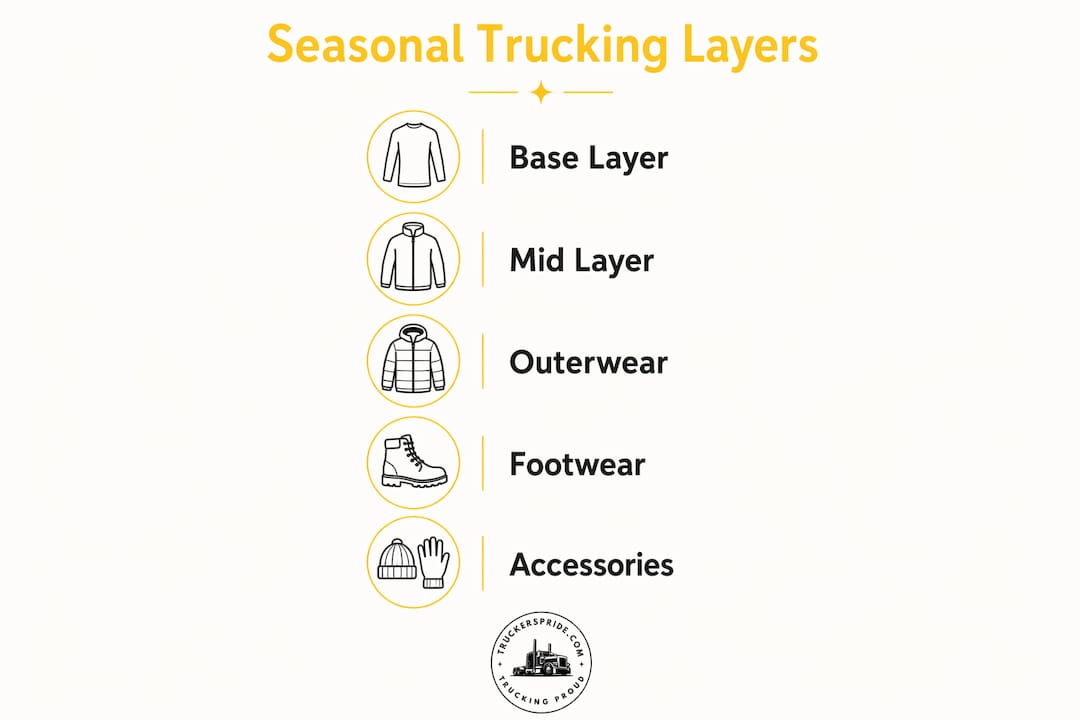
A long haul driver clothing checklist starts with four categories: base layers, work pants, footwear, and outerwear. Each category serves a specific function, and skipping any one of them creates a gap that the road will eventually expose.
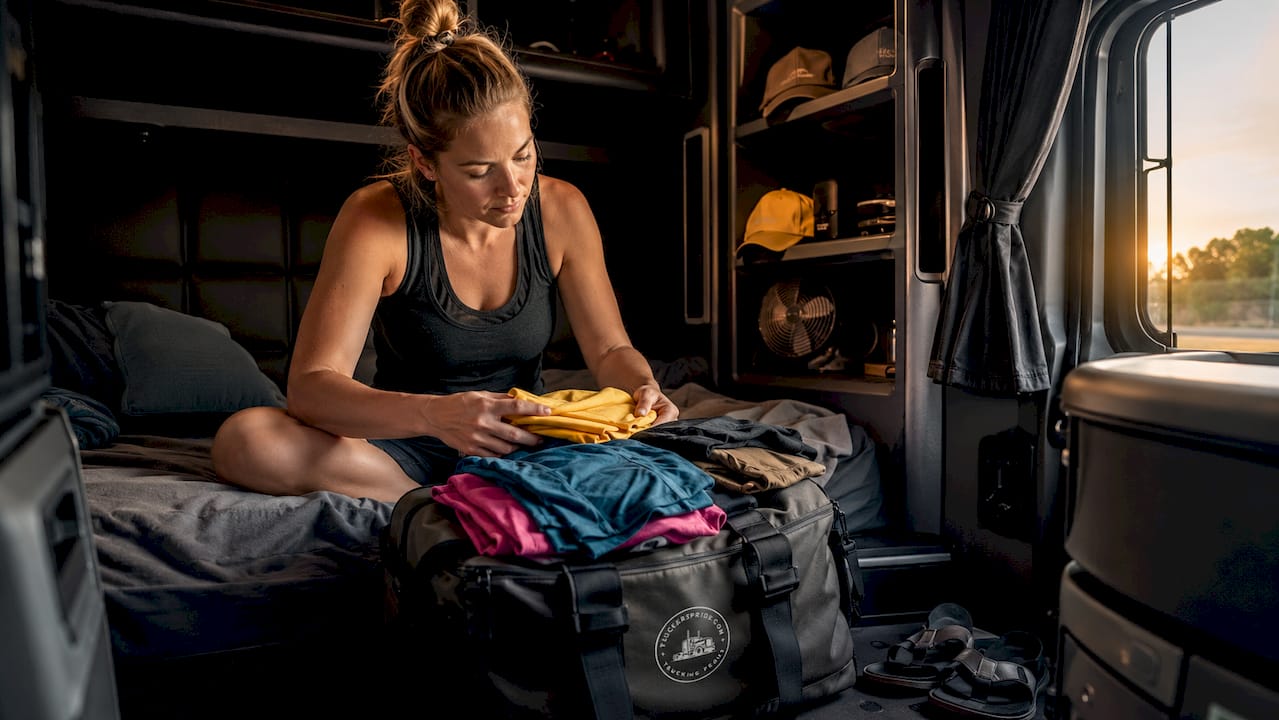
Base layers are the foundation of comfort on a long drive. Moisture-wicking fabrics pull sweat away from the skin, which prevents chafing and regulates body temperature during both hot and cold conditions. Cotton holds moisture; synthetic blends like polyester or merino wool release it. For a driver sitting 10 or more hours a day, that difference is felt by mile 300.
Work pants need to do two things at once: hold up during physical loading tasks and stay comfortable during long sitting shifts. Breathable, articulated garments that allow for movement are the standard recommendation from experienced drivers. Stretch panels at the knees and a gusseted crotch are not luxury features. They are practical requirements for anyone who climbs in and out of a cab multiple times a day.
Footwear carries real safety weight. Most shippers and receivers require steel-toed boots, and slip-resistant soles are the standard for dock work. A second pair of athletic shoes or slip-resistant sneakers handles off-duty comfort and driving. Two pairs of footwear is the minimum a new driver should carry.
Here is a core starter checklist for all-season trucking clothing:
- Moisture-wicking undershirts (5–7)
- Moisture-wicking underwear (7–10 pairs)
- Work pants with stretch panels (3–4 pairs)
- Casual pants or joggers for off-duty (1–2 pairs)
- Steel-toed work boots (1 pair)
- Slip-resistant athletic shoes (1 pair)
- High-visibility vest meeting EN ISO 20471 standards
- Lightweight hoodie or mid-layer fleece
- Waterproof outer jacket
- Warm-weather T-shirts (4–5)
- Thermal long-sleeve shirts (2–3)
- Work gloves and insulated gloves
- Trucker cap for sun protection
- Wool or thermal socks (7–10 pairs)
Pro Tip: Pack one extra pair of steel-toed boots if the route involves frequent dock work. Boot failure on the road means sourcing replacements at truck stops, where selection is limited and prices run high.
How should new truckers adapt their wardrobe to seasonal weather?
Seasonal apparel for new drivers is not about packing four separate wardrobes. It is about building a layering system that responds to temperature swings without requiring a full wardrobe overhaul at every state line.
Winter driving gear
Winter demands the most preparation. Insulated base layers go under work pants and shirts. Waterproof gloves replace standard work gloves for any outdoor task in snow or freezing rain. Snow boots with ankle support protect against ice on dock ramps. Layering with insulated gloves and waterproof jackets is the critical adaptation for variable weather during long hauls. A balaclava or thermal neck gaiter adds meaningful warmth without taking up much space.
Spring and fall driving gear
Spring and fall bring the most unpredictable conditions. Rain, fog, and temperature swings between morning and afternoon are common. A packable rain jacket is the single most useful item for these seasons. High-visibility vests meeting EN ISO 20471 standards are often mandatory at industrial sites and become especially critical in low-light, foggy, or rainy conditions. Reflective strips on outerwear add a second layer of visibility without extra bulk.
Summer driving gear
Summer heat inside a cab is different from outdoor heat. Even with air conditioning running, humidity builds during loading and unloading. Breathable, light-colored T-shirts reduce heat absorption. Sun protection matters beyond the cab window. A trucker cap with a wide brim cuts glare and reduces eye strain on long western routes. Sunglasses rated for UV400 protection are not optional in summer driving.
A practical layering sequence for temperature changes during a single drive:
- Start with a moisture-wicking base layer shirt.
- Add a lightweight long-sleeve shirt for morning cool.
- Carry a mid-layer fleece for elevation changes or evening stops.
- Keep a waterproof shell accessible for sudden weather shifts.
- Remove layers as temperatures rise; store them within reach, not buried in a bag.
This five-step sequence works across spring, fall, and mild winter conditions. It keeps a driver comfortable without requiring a stop to dig through storage.
What packing strategies help new truckers manage limited sleeper space?
Sleeper berth storage is finite, and new drivers consistently make the same mistake: they overpack. New drivers often overpack trying to prepare for all scenarios; an adaptive wardrobe with a consistent laundry routine is more practical. That insight from experienced drivers is worth taking seriously before the first trip.
The 7–10 day clothing window is the right target. It covers the typical gap between laundry opportunities on most long-haul routes. Packing beyond that range adds weight and takes up space that serves better purposes.
Here is a space-efficient packing approach:
- Use compression bags for bulky items like fleece and insulated jackets.
- Store off-season items in a separate bag under the bunk, not in daily-access areas.
- Keep a small laundry bag accessible for worn clothes; separate from clean items.
- Choose garments that serve double duty: a fleece that works as a mid-layer and a casual top saves one item of space.
- Fold pants flat rather than rolling; they stack more efficiently in narrow storage compartments.
Pro Tip: Identify truck stops with laundry facilities along regular routes before the first trip. Pilot Flying J and Love’s Travel Stops both offer on-site laundry at many locations. Planning laundry stops like fuel stops removes the guesswork and prevents running out of clean clothes.
| Clothing category | Recommended quantity | Space-saving tip |
|---|---|---|
| Underwear and socks | 7–10 pairs each | Compression bags cut volume by half |
| Work pants | 3–4 pairs | Fold flat; stack vertically |
| T-shirts and base layers | 5–7 | Roll tightly or compress |
| Outerwear (jacket, fleece) | 1–2 pieces | Store off-season item under bunk |
| Footwear | 2 pairs | One pair in use; one stored in a bag |
How do you choose durable trucking clothing that holds up on the road?
Durability in trucking apparel comes down to construction details that most clothing brands do not prioritize. Professional-grade trucking clothes include reinforced seams and stitch density of at least 10 stitches per inch to withstand heavy use. That number matters because lower-density stitching separates at stress points, and stress points on work pants are constant.
The areas that fail first are predictable: knees, seat, inner thighs, and elbow patches on long-sleeve shirts. Reinforced panels at the knees and a double-stitched seat extend the life of work pants significantly. For a driver doing physical dock work, this is the difference between pants that last a season and pants that last two years.
Sitting comfort combined with active outside-cab duty requires apparel that is breathable, stretchable, and built to last. These three qualities rarely come together in budget workwear. The investment in quality construction pays back in fewer replacements and less discomfort over a long haul.
Key features to look for when evaluating trucking clothing:
- Stitch density: At least 10 stitches per inch at seams and stress points.
- Stretch panels: Gusseted crotch and articulated knees for full range of motion.
- Fabric weight: Medium-weight fabrics (around 6–8 oz per square yard) balance durability with breathability.
- Moisture management: Polyester blends or merino wool for base layers; avoid 100% cotton for any high-activity use.
- Reflective elements: Stitched-in reflective strips on outerwear for visibility during dock work.
- Footwear construction: Steel toe cap meeting ASTM F2413 standards; slip-resistant outsole rated for wet surfaces.
Pro Tip: Before buying work pants, do a seated squat test. Sit down, cross one leg over the other, and lean forward. If the fabric pulls tight or the seam strains, the pants will fail within months of regular cab use.
Key Takeaways
A new trucker’s seasonal wardrobe succeeds when it combines a 7–10 day clothing supply, a layering system for weather changes, and durable construction built for both cab and dock demands.
| Point | Details |
|---|---|
| Pack for 7–10 days | This range covers most laundry gaps without overfilling limited sleeper storage. |
| Build a layering system | Five-layer sequencing handles temperature swings across all seasons without extra bulk. |
| Prioritize safety gear | Steel-toed boots and EN ISO 20471 high-visibility vests are required at most industrial sites. |
| Choose durable construction | Look for at least 10 stitches per inch and reinforced panels at knees and seat. |
| Adapt the list over time | A dynamic packing list that evolves with route experience outperforms any static checklist. |
What I’ve learned about building a trucker’s wardrobe from scratch
The most common mistake new drivers make is treating the clothing checklist as a one-time task. They pack before the first trip, discover what works and what doesn’t by mile 500, and then either live with the wrong gear or spend money replacing it at truck stops where options are limited and prices are steep.
The honest truth is that no static list is perfect. Routes vary. Climates shift. A driver running the I-10 corridor in summer needs different priorities than one covering the northern Midwest in november. The checklist is a starting point, not a final answer.
What experienced drivers consistently get right is the layering approach. They carry fewer total items but make each item work harder. A good mid-layer fleece worn under a waterproof shell handles more conditions than two separate single-purpose jackets. That kind of thinking takes time to develop, but it starts with the right foundation.
Comfort is not a luxury on a long haul. It is a productivity factor. Fatigue builds faster when clothing restricts movement, traps heat, or causes friction. The drivers who take their wardrobe seriously tend to arrive at destinations in better shape, mentally and physically. That discipline, applied to something as practical as clothing, reflects the same commitment that makes a good driver in the first place.
Start with the essentials, pay attention to what the road teaches, and adjust. The list gets better with every trip.
— Sylvain
Truckerspride apparel built for the road ahead
New truckers building their first seasonal wardrobe deserve gear that was designed with their specific demands in mind, not adapted from generic workwear.

Truckerspride builds apparel exclusively for drivers who understand what long hours on the road actually require. The Everyday Essentials Bundle covers the core of a trucker’s daily wardrobe with a hoodie, tee, and cap designed to work together across seasons. For drivers who need breathable performance in summer heat, the DryBlend Performance T-Shirt delivers moisture management built for extended shifts. Every piece is printed locally in North America, which means faster delivery and quality that holds up mile after mile. Drivers who take their comfort seriously know where to start.
FAQ
What is a seasonal clothing checklist for new truckers?
A seasonal clothing checklist for new truckers is a structured list of apparel items covering base layers, outerwear, footwear, and accessories selected to handle year-round weather conditions during long-haul driving. It typically covers 7–10 days of clothing to balance hygiene with limited sleeper berth storage.
How many days of clothing should a new trucker pack?
Industry best practice recommends packing 7–10 days of clothing. That range covers most gaps between laundry stops without overfilling the limited storage space in a sleeper berth.
What footwear do truckers need for safety compliance?
Most shippers and receivers require steel-toed boots meeting ASTM F2413 standards. A second pair of slip-resistant athletic shoes handles driving comfort and off-duty use.
What does EN ISO 20471 mean for trucking visibility gear?
EN ISO 20471 is the international standard for high-visibility clothing. Vests and outerwear meeting this standard are often mandatory at industrial loading sites and improve driver safety in low-light and bad weather conditions.
How do new truckers keep clothing organized in a sleeper berth?
Compression bags reduce bulk for outerwear and off-season items. Keeping a dedicated laundry bag for worn clothes and storing off-season gear under the bunk keeps daily-use items accessible without cluttering the living space.