

Road conditions directly determine how fast work clothing wears out, where it fails first, and how well it protects the person wearing it. For truck drivers and outdoor workers, this is not a minor concern. The physical and environmental stresses of long-haul routes, from rough pavement to desert heat to mountain cold, break down fabric faster than most drivers realize. Understanding how road conditions affect clothing wear is the first step toward making smarter choices about what to wear, how to care for it, and how long it will last.
How road conditions affect clothing wear at the surface level
The road itself is the first aggressor. Rough pavement, gravel, and dirt surfaces generate airborne particles that settle into fabric fibers and act like fine sandpaper with every movement. This is the core mechanism behind abrasion wear, the industry term for mechanical fiber degradation caused by repeated friction and particle contact.
Abrasion creates fiber breakage leading to fabric thinning and pilling, with high-friction zones like cuffs and elbows wearing thinner first. That pattern matters because it tells drivers exactly where a garment will fail before the rest of the fabric shows any sign of stress.
Different road surfaces create different wear profiles:
- Smooth highway asphalt: Generates fine dust that embeds in weave structures, causing slow but steady abrasion over thousands of miles.
- Gravel and unpaved roads: Produce coarser particles that accelerate surface pilling and can compromise water-resistant coatings on outerwear.
- Muddy or wet roads: Introduce clay and organic matter that clog fabric pores, reducing breathability and adding weight stress to seams.
- Construction zones: Combine concrete dust, metal shavings, and chemical residues that are particularly harsh on synthetic membranes and dyed fibers.
- Desert terrain: Dry, fine sand acts as a continuous abrasive, especially on exposed collar edges and sleeve openings.
Pro Tip: When choosing outerwear for rough road environments, look for garments with reinforced panels at the elbows, cuffs, and collar. Fabrics rated for high abrasion resistance, such as Cordura nylon blends, outlast standard polyester in these zones by a significant margin.
The impact of road conditions on clothes is not uniform across a garment. Wear concentrates where the body contacts surfaces repeatedly, and the road environment determines which particles and chemicals accelerate that process.
How weather affects clothing durability on the road
Weather tied to road travel adds a second layer of stress that most drivers underestimate. Temperature, humidity, and sun exposure each attack fabric through different mechanisms, and they often work together.
Relative humidity fluctuations account for 5–15% variations in fabric tensile and tear strength. That means a garment tested in a controlled environment may perform noticeably worse on a humid summer route through the Gulf Coast than on a dry winter run through the Rockies.
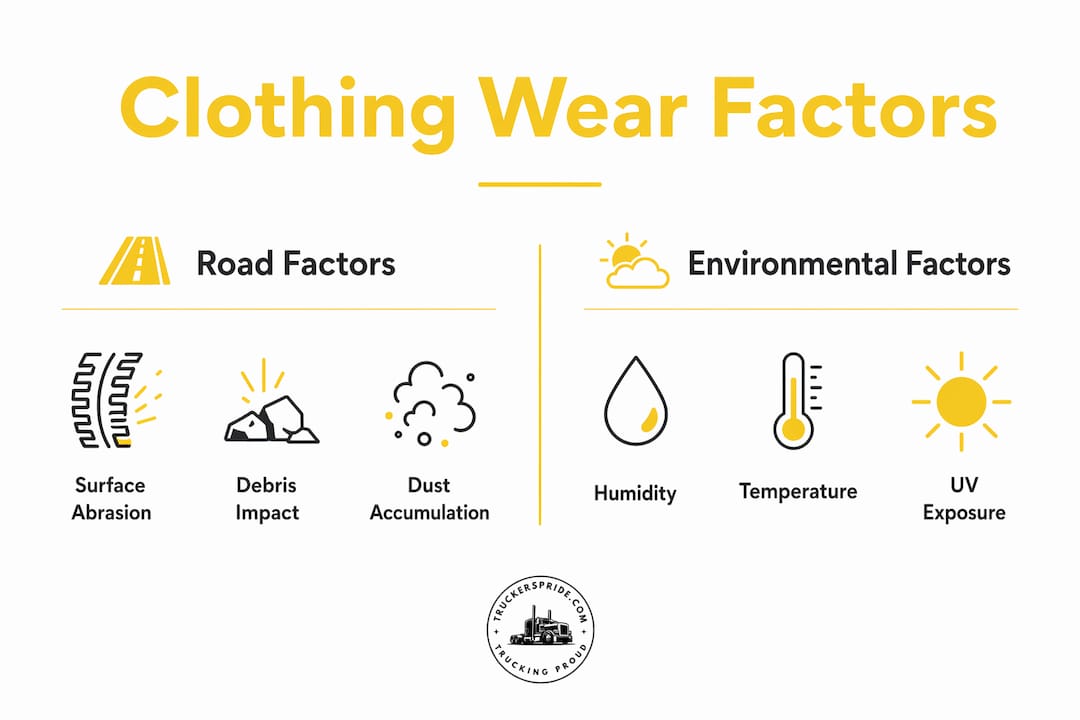
Temperature swings of 20–30°F in a single day on the road require layered clothing strategies. Repeated expansion and contraction of fibers under these swings causes what textile scientists call fiber fatigue, a gradual loss of elasticity and structural integrity that shortens garment life.
UV radiation breaks chemical bonds in fibers causing strength loss and brittleness, especially in natural fibers like wool and silk. Drivers who park facing south during rest stops or work outdoors in direct sun accelerate this process on shoulders, upper sleeves, and cap brims.
| Weather variable | Primary effect on fabric | Most vulnerable materials |
|---|---|---|
| High humidity | Reduces tensile strength by 5–15% | Cotton, wool, untreated synthetics |
| Temperature swings | Causes fiber fatigue and elasticity loss | Spandex blends, elastane |
| UV radiation | Photodegradation, color fading, brittleness | Wool, silk, undyed cotton |
| Wind and rain | Accelerates membrane and seam tape wear | Waterproof outerwear, coated nylon |
| Extreme dry heat | Desiccates natural fibers, causes cracking | Leather, untreated cotton |
Pro Tip: Dress for heat index and wind chill, not just the thermometer reading. A 75°F day with high humidity and direct sun places far more thermal and UV stress on clothing than a 75°F day in shade with low humidity. Matching clothing to actual thermal load extends both comfort and garment life.
Road trip clothing durability depends heavily on matching fabric choice to the specific climate zone of a route. A driver running the I-10 corridor through Texas and Arizona faces a completely different fabric stress profile than one running the I-90 through the Pacific Northwest.
What driving posture does to clothing that walking never would
This is where the wear story gets specific to truck drivers. The cab environment creates mechanical wear patterns that have no equivalent in walking or physical labor. Most drivers notice the results but rarely connect them to the cause.

The right heel pivots on truck floor mats causing specific scuffing and sole wear not seen in walking. Walking distributes heel contact across a stride cycle. Driving pins the right heel in one spot for hours, grinding it against the same surface repeatedly.
Two hours of driving generate friction equivalent to thousands of rubs on sleeve undersides from armrest contact. This causes pilling on the inner forearm of shirts and jackets, even on garments that see no physical labor at all. High-end merino wool and fine-knit synthetics are particularly vulnerable here.
Key wear zones differ significantly between drivers and outdoor workers:
Driver-specific wear zones:
- Right heel and sole edge from floor mat pivot
- Inner forearm and elbow from armrest friction
- Back of collar from headrest contact
- Seat-contact areas of pants from prolonged sitting pressure
- Belt line from seatbelt friction during long hauls
Outdoor worker wear zones:
- Knees from kneeling and crouching
- Shoulder seams from carrying loads
- Palm and thumb areas of gloves from gripping
- Boot toe caps from ground contact during walking
- Lower back of shirts from bending
Understanding these patterns helps drivers choose the right fabric weight and construction for each garment type. A shirt that performs well for a warehouse worker may pill and thin at the forearms within a month of cab use.
Maintenance and care habits that extend garment life on the road
Caring for work clothing correctly is where most drivers lose ground. The road deposits sweat, diesel residue, road oils, and grime into fabric with every shift. Letting those contaminants sit accelerates breakdown faster than the road itself.
Regular washing removes sweat and oils that accelerate membrane and seam tape degradation. This runs counter to the common belief that washing wears out gear. Washing per label instructions is protective, not destructive. Skipping washes is what shortens garment life.
Heat is the other major threat. Elasticity in quality garments with spandex or elastane lasts 2–5 years with heat-free care, but frequent dryer use can reduce that to a single season. Air drying is not optional for performance fabrics. It is the difference between a garment that lasts a year and one that lasts five.
Most waterproof gear failures happen at weak points like zippers and hems, not main fabric panels. Dirt and oils degrade seam tape at these points long before the outer shell shows wear. Early repair of these zones extends the functional life of an entire jacket.
A practical maintenance sequence for road-worn clothing:
- Inspect after every long haul. Check cuffs, collar, armrest contact zones, and zipper seams for early pilling or seam separation. Catching damage early prevents full failure.
- Wash promptly after exposure to mud, fuel, or heavy sweat. Follow label instructions. Use a gentle cycle for waterproof outerwear and technical fabrics.
- Air dry all performance fabrics. Hang garments in a ventilated space. Never use high heat on elastane, spandex, or coated synthetics.
- Reapply DWR treatments to waterproof outerwear seasonally. Durable water repellent coatings wash out over time and can be restored with spray-on or wash-in treatments.
- Repair seams, zippers, and cuffs before they fail completely. A small seam repair costs minutes. Replacing a jacket costs significantly more.
Drivers who follow a seasonal clothing checklist approach to garment care and replacement stay ahead of wear rather than reacting to it. The road does not slow down, and neither should the maintenance routine.
Key Takeaways
Road conditions impose mechanical, environmental, and postural stresses on clothing that require specific fabric choices, targeted care, and proactive maintenance to manage effectively.
| Point | Details |
|---|---|
| Road surface abrasion | Rough and unpaved roads accelerate fiber breakage at cuffs, elbows, and collar edges first. |
| Humidity and UV damage | Humidity shifts fabric strength by 5–15%; UV breaks fiber bonds, especially in natural materials. |
| Driver-specific wear zones | Right heel pivot and armrest sleeve friction create wear patterns unique to cab environments. |
| Heat-free garment care | Air drying preserves elastane performance for 2–5 years; frequent dryer use cuts that to one season. |
| Repair weak points early | Zippers, hems, and seam tape fail before main fabric panels; early repair extends full garment life. |
What I’ve learned about clothing wear that most drivers find out too late
I’ve watched drivers invest in quality gear and then destroy it in a single season through two avoidable mistakes: skipping washes and using the dryer. The road gets the blame, but the laundry room is often where garments actually die.
The other thing most drivers overlook is the armrest. A fine-knit shirt that looks perfect after a week of physical work can pill badly on the inner forearm after a single long haul. That is not a quality problem. That is a fit-for-purpose problem. Cab environments demand fabrics with tighter weave structures and higher abrasion ratings at specific contact points.
The myth that washing wears out gear is particularly damaging. Sweat salts, road oils, and diesel residue are chemically aggressive. They do not sit harmlessly in fabric between washes. They work continuously, breaking down membranes and seam adhesives from the inside. Washing stops that process. Not washing accelerates it.
My honest recommendation is to treat clothing maintenance with the same discipline applied to truck maintenance. A driver who skips oil changes does not blame the engine when it fails. The same logic applies to gear. Build a starter wardrobe with durability in mind, then protect that investment with consistent care. The road is hard enough on clothing without adding neglect to the equation.
— Sylvain
Gear built for what the road actually does to clothing

Truckerspride designs apparel with the specific stresses of long-haul driving in mind. The Pride in Every Mile bundle combines a hoodie, tee, and cap built for the friction, temperature swings, and extended wear that define life on the road. Each piece is printed locally in North America, which means faster delivery and consistent quality control. The DryBlend performance tee handles moisture and armrest friction better than standard cotton, making it a practical choice for drivers who spend hours in the cab. Gear that understands the road is gear that lasts.
FAQ
How do road conditions cause clothing to wear out faster?
Road surfaces generate abrasive particles that embed in fabric and cause fiber breakage at high-friction zones like cuffs and elbows. Environmental factors like humidity and UV radiation compound this by weakening fiber bonds over time.
What fabrics hold up best on rough roads?
Tightly woven synthetics like Cordura nylon blends resist abrasion better than standard polyester or cotton in high-contact zones. For base layers, fabrics with spandex or elastane perform well when cared for with heat-free drying.
Does washing work clothing really extend its life?
Regular washing removes sweat, oils, and road contaminants that degrade fabric membranes and seam tape from the inside. Skipping washes accelerates breakdown; washing per label instructions is protective.
Why do truck drivers wear out clothes differently than other workers?
Driving posture creates unique friction points, including right heel pivot wear on floor mats and sleeve pilling from armrest contact, that do not occur in walking or physical labor. These patterns require different fabric choices at specific garment zones.
How does temperature change affect clothing durability on long hauls?
Temperature swings of 20–30°F in a single day cause repeated fiber expansion and contraction, leading to fiber fatigue and elasticity loss over time. Layering strategies that account for these swings reduce stress on any single garment.